The yoga mat in your sandwich.
One chemical puts the squish in exercise mats and the fluff in American bread. Europe decided that was a problem. The US never did.
By the Svelio editorial team · June 25, 2026
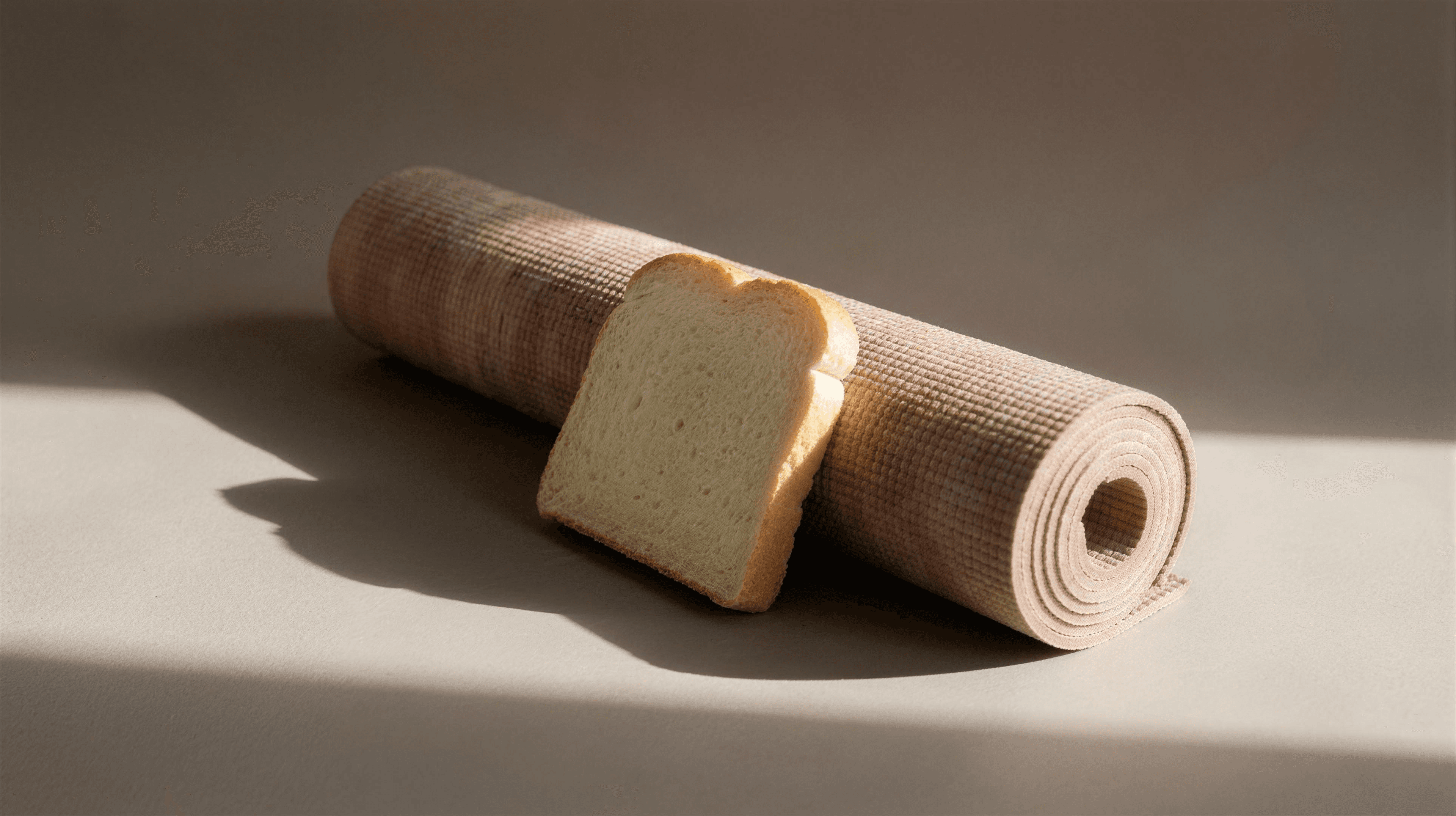
Azodicarbonamide is a good industrial chemist's workhorse. It foams plastics into the squish of a yoga mat and the cushion of a shoe sole. It also spends its day job inside a lot of American bread, where it bleaches flour and toughens dough so a loaf can survive shipping and still look pillowy on the shelf.
Europe looked at the same molecule and drew a line. The result is a quiet split you can hold in your two hands: a loaf that is ordinary in a US grocery aisle and illegal to sell as food across much of the world.
A plastics chemical with a second job
In the United States, azodicarbonamide is permitted as a flour treatment at up to 45 parts per million. Bakers like it because it conditions dough fast and cheaply. The catch is what it leaves behind: as the dough bakes, the compound breaks down, and among the byproducts are semicarbazide and urethane. The World Health Organization has linked the raw chemical to respiratory problems in the workers who handle it, and its breakdown products have raised flags in animal studies, where high doses of semicarbazide produced tumors in mice.
None of that is a verdict on the slice in your hand. It is the reason regulators on three continents decided the convenience was not worth keeping.
Banned there, legal here
Azodicarbonamide is not authorized as a food additive in the European Union, and it is banned for food use in the UK, Australia, and Singapore. In the US it remains generally recognized as safe. That gap is the whole story: same chemistry, two different answers, and only one of them printed on the bread you actually buy.
The list keeps shrinking
In 2014 the Environmental Working Group found azodicarbonamide in nearly 500 products across more than 130 brands of bread, rolls, stuffing, and packaged sandwiches. Public pressure moved fast: Subway and Wendy's dropped it that year, and the retreat has continued since, with Arby's among the more recent chains to reformulate. In August 2025 the FDA added the ingredient to a formal post-market review, a signal that even the agency that cleared it wants another look.
Where you'll find it: Historically found in mass-market baked goods: supermarket sandwich breads, burger and hot-dog buns, dinner rolls, and packaged stuffing mixes (some varieties, historically). Many have since reformulated; the only way to know is the label in front of you.
How to catch it
On a label the word hides in plain sight, mid-list, spelled the way no shopper reads aloud: azodicarbonamide, sometimes just ADA. It is exactly the kind of thing the eye slides past and a scan does not. Point Svelio at the ingredient panel and it flags azodicarbonamide as avoid, tells you what it is, and notes the countries that pulled it, before you decide whether to put the loaf in your cart.
References
- Center for Science in the Public Interest. (n.d.). Azodicarbonamide — Chemical Cuisine.
- Environmental Working Group. (2014). Nearly 500 ways to make a yoga mat sandwich.
- European Union. (2008). Regulation (EC) No 1333/2008 on food additives.
- U.S. Food and Drug Administration. (2025). Post-market assessment of chemicals in food.
Editor's note: Regulatory status and product categories were cross-referenced across the CSPI Chemical Cuisine, EWG Food Scores, and Open Food Facts. Formulations change; the package in your hand always trumps the post. Spotted an error? Email info@svelio.io.
“Banned for food in four countries. Still legal in the loaf on your counter.”
There's always something they're not telling you.
Each Brief is one investigation we couldn't sit on: an additive, a brand watch, a regulatory shift. The next one might be about your favorite snack.